I have always known aloe to be a herb that is one you would want to have in your garden. I like to have this one on hand all the time. It is known as medicine plant because the gel that you will find in the leaves is used externally only to treat many skin aliments. It also has decorative qualities that you can appreciate.
Description Aloe's life cycle is perennial. It grows two to three feet tall at maturity. Aloes are good for zone 9 and 10, but if you do not live in these hardiness zones, you will need to grow it inside as a houseplant, along with your other houseplants like I do. The flowers of the aloe will be yellow or orange one-inch-long tubular flowers that are borne in a terminal cluster on a three to four foot long stalk. Aloe's leaves are fleshy, sword-shaped leaves that has spiny edges that grow to form a rosette. Aloe is not used internally.
How To Grow Aloes can be planted in zone 9 and 10 anytime in the garden. If you live north of zone9, you will need to grow your aloe in a container and overwinter it indoors. Aloe likes full sun but they will tolerates partial shade. The soil needs to be well-drained neutral soil of average fertility. The aloe plants allow one to two feet between growing outdoors. Root mealybugs is the pest that you will have to watch out of. Aloe is susceptible to root rot in a soil that is consistently moist. Harvesting
Aloe can be harvest anytime during the growing season once they reach to a minimum of five to six inches long. To harvest aloe, all you have to do is, cut off the oldest leaves at the base. Uses I always like to have an aloe in my home because of its skin-healing properties. You will need to split the leaf and rub the gel from the inside of the leaf over minor burns. The gel has compounds that are both anesthetic and antibacterial. If the burns is not real serve, the gel prevents scar tissue from forming and helps the pigmentation to return back to normal.
Tips About Aloe You will need to remove an offshoot, shake the plant out of the container and gently pull the young plantlet away from the mother plant. Use a trowel to separate the offshoots from the plant. The offshoot will have some roots on it, so you can plant it in a container or if you live in a warm zone, you can planted it in your garden. Aloe require not much attention as long as it is planted in a fast-draining soil and you will only need to water when the top of the soil dries out.
LIGHT I want to grow my own herbs indoors during the winter. I will have to have a lot of light. In most areas, sunlight is not enough for your herb plants, other than keep your well-grown plants alive. I am going to grow allot of different herbs. I will buy a four foot long fixture of fluorescent tubes. Keep the tops of my plants five inches from the tubes. Herb plants need to be put on individual blocks or bricks, so they can be move closer or farther away from the light as necessary. ANNUAL Planning Your Indoor Garden I am going to grow herbs that are annuals, you can start your indoor garden by using seeds. Some of the annual herbs that you can start this way is dill, summer savory, basil, cilantro, and chervil by planting the seeds in mid-to-late August.
Plant about ten seeds around a ten to twelve inch pot. After they germinate, you will then need to thin to four or five plants. For the first few weeks you can leave them outside. To get them use to their winter quarters, you will need to move them into shade one week before you move them indoors for good. Basil and other tender annuals need to be moved indoors long before frost hits where you live. Annual plants that are grown indoors, even using artificial light, will not remain vigorous for as long as if they are grown in your outside garden. To have a constant supply of different herbs, you will need to do the planting every four to six weeks, from October through February. Perennial herbs Perennial herbs can be potted up well before frost and bring them indoors, and this is the way to have them to snip during all winter.. Some of the perennial herbs are tarragon, thyme, mint, oregano, and winter savory when you or I will divide them up in the spring. Leave the pots out all summer and through the early part of winter. All of these plants need the rest that you or I can give them a period of dormancy. In January, bring them into a slightly warmer area which could be a garage or basement for about a week. After this, I will need to bring them inside. Once the growth has started, this is when I will need to put them under lights.
Chives Chives has to experience a winter rest. In the fall, plant them in pots about twelve inches deep. Leave them outside until January. Next, they need to be move inside into a heated area. Chives will not remain productive all winter, so I will need to make several pots to last me through out the winter. Parsley This herb is demanding when you bring it inside. The best way to do this particular herb is to seed it directly into a pot in late June. Each pot needs to be at least twelve inches deep by twelve inches wide. Keep all the pots outside all summer, remembering to give it ample water and monthly feedings with compost solutions. Put the pot into the shade that is filtered about a week before it going to frost where you live at. More herbs to Overwinter Indoors Some herbs can not take wintertime in most regions of the United States. If you want to keep your herbs from year to year like I do, I bring them inside during the winter, and put them in a well-lit window or under a plant light. Each pot needs to be brought inside during the cold months. If they are planted in the ground, they will need to be dug up and planted into pots. Each pot needs to be two inches wider than the root ball. In most region, the following plants should be indoors during winter. These herbs are lemongrass, lemon verbena, aloe, lavender, french scented geraniums, pineapple sage, lemon thyme, rosemary [hardly from zone 8 south]. These herbs will be happy to be growing on any body's windowsill.
Chives can be grown in the garden or on the windowsill so you can always have a fresh supply available. Chives grows 12 inches tall in height and it is a perennial, which will be able to grow in zones 4 though 9.
The bloom traits of chives are big pink flowers from mid-spring on and off throughout summer and early fall. Chives likes to grow in open, sunny areas, but they also like to grow in the garden.
Chives are very easy to grow from seed and it requires no special treatment. In early spring, you can sow them directly into your garden soil or you can start them indoors for transplanting them in your garden later in the spring or early summer. Germination is about 80 percent and sprouting occurs in about 2 weeks. They can also be propagated by root divisions either in early spring or fall. These plants grows in clumps, so you will need to space them 12 inches apart and water moderately. Chives likes full sun to full shade. Chives is adaptable to different soil types, but prefers a well-drained locations. Chives are wonderful in food garden or a counter top herbs. Chives grows with summer savory, hearts ease, and red ship.
When chives are ready to harvested do not pull up all of the chives plants because this will kill them. You need to only cut the aerial parts of the plants. You can picked the flowers using scissors or snips. The green leafy parts are good to add to some of your vegetables, pasta salads, or egg dishes.They are better fresh. Chives is a good herb to grow for yourself, especially if you are like me and I really like to cook with all different types of herbs.
Rosemary is a herb that is one of the best antioxidant. It is also good for enhancing circulation. This herb helps increase the oxygen supply to the brain and this helps in sharpening concentration and memory.
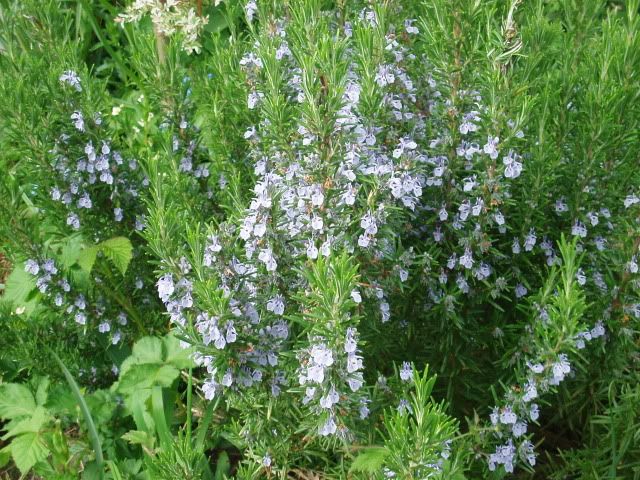
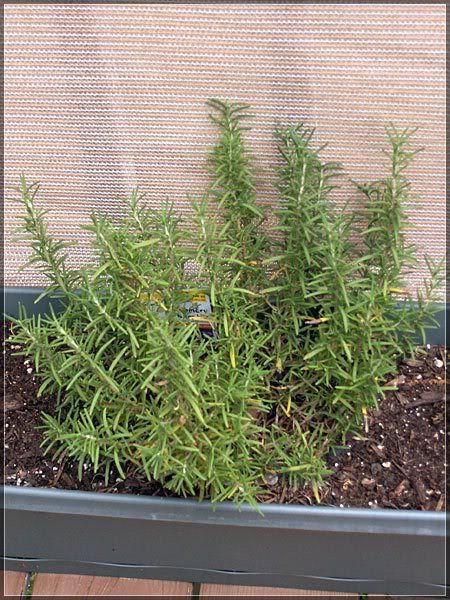
Rosemary is a tender perennial herbaceous which grows in the zones of 8 to 11. This herb can grow up to 12 to 36 inches, it can also grow a lot taller.. This herb can not go below 38 degree F. Rosemary blooms, blue flowers really well when you have cooler nighttime temperatures to set the flower beds.
Rosemary prefers hot temperatures and dry soil conditions. Rosemary also enjoys having extra humidity. Rosemary is from the Mediterranean region.
When you are ready to prop age rosemary, you will need to propagate rosemary from tip cuttings. You will need to use a liquid rooting hormone to get better root formation. There are two things that rosemary has to have to be able to grow and they are good air circulation and extra warmth. Rosemary's clippings need to be kept moist, but make sure it is not soggy until the rooting structure gets strong. Rosemary likes full sun all the time. If you want to grow rosemary, you will need to keep the soil well-drained. With rosemary growing in clumps, the plants should be spaced 12 to 15 inches apart. Keep the rosemary water lightly to moderately. These are some plants that rosemary grows real good with in community and they are California poppy, lavender, sonatina, and hyssop.
You can harvest rosemary anytime during the growing season. The part of the plant that you harvest is the aerial parts either fresh or dried. You can sell fresh at farmer's markets and to chefs for medicinal food. Rosemary is beneficial for the immune system and also for winter illnesses. Allot of the digestive tract, the respiratory system, circulatory system, brain health, and the skin. Rosemary has allot of different ways that it can help people from one of the best sources of antioxidants along with many different ways.
Chamimile is a herb. The German chamomile is an annual. The Roman chamomile is a perennial. Chamomile grows in - 9. The German chamomile grows up to 24" high. The Roman chamomile grows from 8 to 10 inches tall.
Chamomiles blooms white, daisylike flowers. This herb blooms from June through frost. Both kinds of chamomile are considered garden dwellers. They like to have full sun and partial shade. Both kinds of chamomile grows best in well-drained soil. German chamomile is easy to grow from seed. It can be direct-sown in a garden or field. I have to keep the tiny seeds moist so it can germinate and this is very difficult, so a easier way would be starting your plants inside and then transplant them. After all the frost danger has passed where you live, they still need to have 3 to 4 weeks before transplanting your plants. outdoors. When you are transplanting your plants you will need to space them 10 inches apart. The seeds germinate in about two weeks at the rate of 50 70 percent. German chamomile grows as one plant and you will need to water them light to moderate. I can grow Roman chamomile from seeds and it is easy. Their germination rate is lower than the German chamomile. Roman chamomile germination rate is 40 to 60 percent. Instead propagate by divisions. The Roman chamomile is propagate by divisions. Roman chamomile is spread by rhizomats roots. The Roman chamomile plants has to be spaced eight inches apart, so they will have enough room to fill in as a ground cover. Roman chamomile needs a light to moderate amounts of water.
When both kinds of the chamomile are in the blooming season, this is when you need to do the harvesting. The parts of the chamomile that are used in harvesting are the flowers and the flowering tops. They can be used fresh or dried. If you are only going to used flowers, you need to harvest them by hand or with the help of a chamomile rake. A chamomile rake is a special tool that is designed to harvest the chamomile.
Chamomile has many medicinal benefits. It is a good sedative and nerve herb. Chamomile has soothing, calming, and anti- inflammatory actions which will help many people It is a skin aid, children's herb, digestive herb and a sleep aid Chamomile is used a lot in the herb industry. It is used in many different way, so this makes this herb a popular herb to have around.
Plantain is a herb that has many different benefits in growing it yourself or having it where you can get it when you need it. Plantain has a plant cycle of a perennial and a type of growth which is herbaceous. This herb can grow in the zones 3-9.
Plantain can be found in many different climates and it is always found in disturbed soil. It is not unusually to find plantain growing alongside a mountain hiking trail. You can also find plantain growing intermixed with the grass at a local park or maybe out in your pasture especially if you live out in the country like I do. Plantain has a bloom traits which are tiny white flowers that grace a stalk that will later forms tan seeds. Plantains grows from eight to twenty inches in height.
It is easy to grow plantains from seeds and if you stratify the seeds before you plant them, this will increase your germination rate to about seventy percent. Sprouting takes one to two weeks. You can start indoors in mid-spring and have them ready to transplant out in late spring, or start directly outdoors in early to mid-spring. Because of plantain, growing in clumps they should be spaced twelve inches apart and it should be water moderately. This herb does not require any special soil needs. Plantain has to have full sun and partial shade to grow. When you are harvesting plantain, you will harvest the whole plant and you can do this with a garden fork or a needle-nose spade. Plantain is harvest in spring though fall. The day that your plantain is going to be harvests, the soil needs to be moist, but not soggy. If you only want to use the roots only, then trim off the aerial parts with a pair of snips. Leaves may be handpicked or snipped at any point during the growing season. You can harvest the seeds by waiting into maturity and then rub them from the stalks and husks. The parts that you can use are whole plant, roots, seeds, and leaves. You can used them either fresh or dried. Plantain has many different medicinal benefits and they are skin problem, gastrointestinal conditions, the urinary tract, and children's health. It is also good for stopping minor bleeding and for relieving insect bites and stings. Plantain is good to have with you if you happen to have a problem that require some first aid. If you have a problem all you need to do is to lay a leaf directly over the effected place or skin place and secure it with first-aid tap. The leaf will soothe the irritation and promote healing of the affected tissue.
Cayenne, potatoes, bell peppers, and eggplant are all members of the Solonaceae family. Never eat the leaves, flowers, or stems of the cayenne pepper plant. Do not eat any of these parts of the cayenne plant because they can be toxic. The fruits are perfectly safe. There are a need that everybody has to be very careful about how much anybody used because these peppers are very hot.
The cayenne pepper is aan annual herbaceous and it grows up to 24 inches. Cayenne are probably native to South America. They are all cultivated plant at this time, but you still have some growing in the wild. Cayennes prefer to grow in hot and dry areas, so you can have long seasons and bright sunny days.
Cayenne needs to be started in late winter or early spring, indoors in a bright, sunny, warm, location. With cayenne seeds, they do not have to have any special treatment. The seedlings does like very warm temperatures to grow well. The germination is real good and it only takes one week. When everybody do all the right growing condition there will be 80 90 percent germination. After all danger of frost, this is when the plants can be transplant outdoors. I leave 12 inches between each of my cayenne plants. These plants require very little watering and they grow in clumps. Cayenne plants like full sun to grow. They also prefers dryish soil. There are two other herbs which are cilantro and basil that if I grow my cayenne close by this will enhance each of these herb's flavor. To harvest the cayenne you will need to pick the bright red fruits which are called chilies in late summer, or even in early fall. before the first frost comes.
Cayenne is one that many chefs uses this in their dishes as a flavoring. Cayenne is found at farmer's market. There are many medicinal benefits of using cayenne. They are used for heart, circulatory health, as well as for pain relief especially of the muscules and joints.
Summary Cayenne is a very good herb to have because it has many benifitical uses.