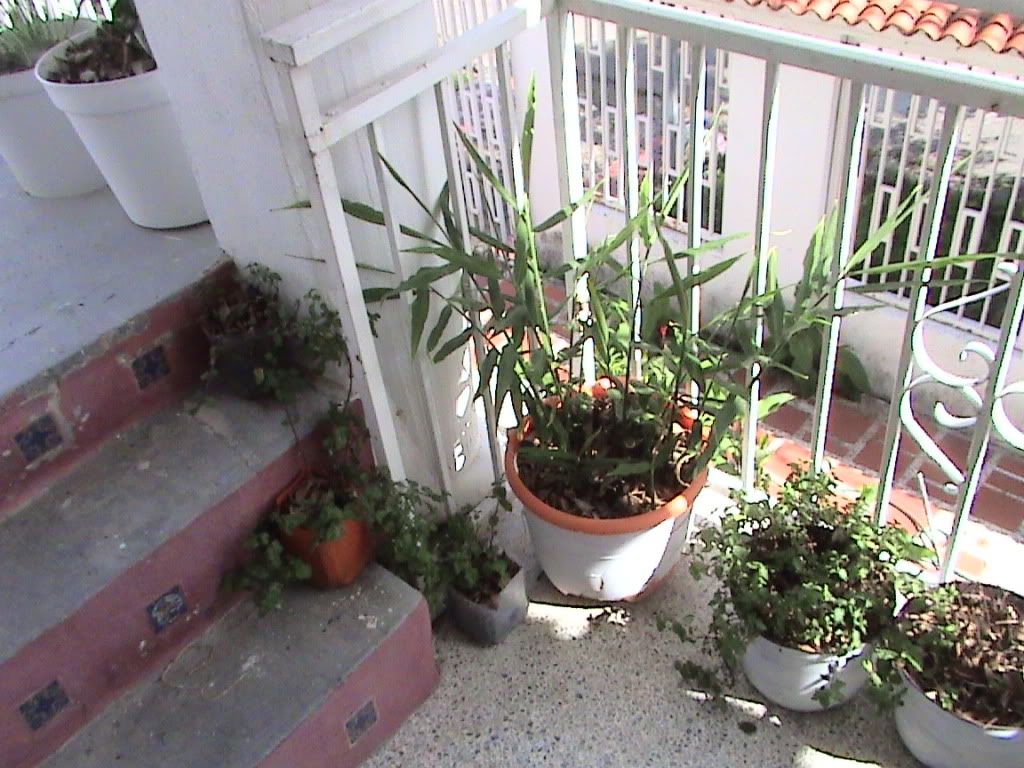
Ginger is a perennial herbaceous. It grows well in zones 9 - 11. Ginger will make a nice houseplant or container herb on a patio in nontropical climates. Now, in a tropical garden, ginger should be planted as an understory plant, because it prefers to have partial to full shade. It prefers to have a rich, loamy and well-worked soil that needs to be kept evenly moist. Ginger will grow from 3 to 4 feet tall.
Ginger is a shade-loving plant, ginger grows in hot, moist, tropical regions. Spikes are clad in waxy, yellowish, green flowers that has some purple on the tip. Ginger rarely flowers under cultivation.
Ginger are propagate by planting the rhizomes. They grow in 'sections' that can be broken apart easily, at the joints. The eyes which are called buds, look on each section, plant a rhizome with the eyes facing up toward the soil surface. The rhizomes need to be planted 1 to 2 inches below the surface of the soil, about 15 inches apart. Ginger rarely produces seeds, and when the seeds do form they are sterile. Ginger grows mainly in clump and spreads slowly by rhizomes. Ginger requires a great amount of water. Ginger is a great container herb that grows well indoors in indirect light. Ginger will also do good on a nicely on a protected shaded patio. It grows real good with nasturtium, turmeric, and gotu kola in a shady container garden.
Harvesting times will depend on how the ginger will be used. If the ginger is going to be used fresh, the ginger rhizomes will be harvest between 4 to 7 months of age. The older ones 7 to 9 months which are more pungent, and less fleshy rhizomes are harvested for dried preparations. If the fresh ginger is finely grated over rice and steamed vegetables, the food will be tasty. The dried ginger can be finely or coarsely ground in a spice grinder and then used in cookie recipes, such as gingersnaps, and oatmeal cookies.
Echinacea is a perennial herbaceous and it grows good in zones 3 to 9, but this depends on which species that you are working with such as, E. Angustifolia, E. pollida, and E. purpurea.
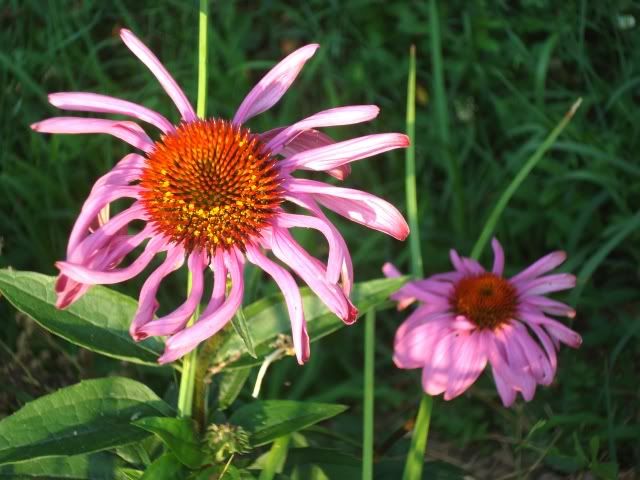
Echinacea angustifolia grows to a height of two feet tall.. E. palidia grows to a height of 2 to 3 feet tall. E. purpurea grows to the height of 3 to 4 feet. Echinacea has pinkish purple flowers that blooms from mid to late summer. Echinacea is a prairie wildflowers. It likes to grow in the wide open grassy areas.
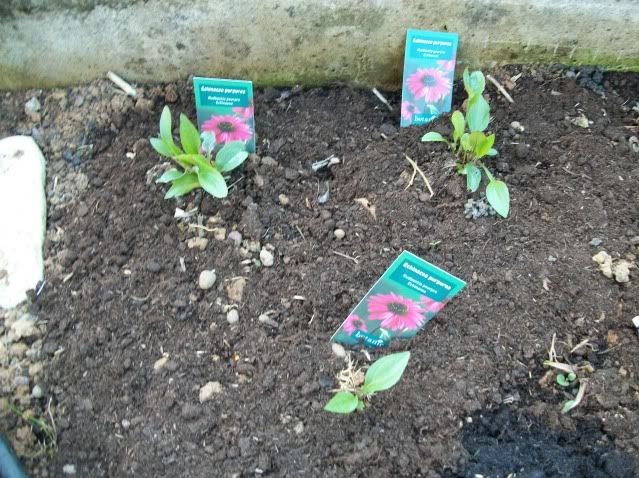
All of the echinacea species will do better from the seeds that are artificially stratified for at least three months. Or the seeds can be stratified naturally, by sowing seeds directly in the garden in the late fall or early spring, this method is reliable only in areas that have consistently cold winters.If the seeds are sown indoors, then the plants are transplanted outside in late spring. The seeds take from 2 to 6 weeks to sprout. Echinacea grows in clumps, the plants needs to be spaced 12 inches apart. The E.purpurea species has to have moderate water, where as the other two species needs light water. All species of the echinacea requires full sun. E> angustifolia and E. pullida require poorer soil that is not overly moist. E> purpurea needs richer soil and regular watering.
The roots are harvested in the fall or spring after they reach two and one half to three years old. E. purpurea has a tricky -to - harvest taproot. E. angustfolia and E. pallida have fibrous roots that are easier to harvest. The aerial parts, flowers, and seeds can be harvest with snips after the second growing season on. The whole plants are harvested when it is in peak flower. This can be done by using a garden fork or a needle- nose spade to dig the roots and the whole plant in. The whole plant can be used either fresh or dried. The medicinal benefits of the echinaces are great for colds and flu, immune system support, and respiratory and skin conditions. There are several different home pharmacy uses, which are, infusion, traditional tincture, bath herb, syrup, lozenge, elixir, butter, foot soak, ointment, salve,, infused oil.
Chamimile is a herb. The German chamomile is an annual. The Roman chamomile is a perennial. Chamomile grows in - 9. The German chamomile grows up to 24" high. The Roman chamomile grows from 8 to 10 inches tall.
Chamomiles blooms white, daisylike flowers. This herb blooms from June through frost. Both kinds of chamomile are considered garden dwellers. They like to have full sun and partial shade. Both kinds of chamomile grows best in well-drained soil. German chamomile is easy to grow from seed. It can be direct-sown in a garden or field. I have to keep the tiny seeds moist so it can germinate and this is very difficult, so a easier way would be starting your plants inside and then transplant them. After all the frost danger has passed where you live, they still need to have 3 to 4 weeks before transplanting your plants. outdoors. When you are transplanting your plants you will need to space them 10 inches apart. The seeds germinate in about two weeks at the rate of 50 70 percent. German chamomile grows as one plant and you will need to water them light to moderate. I can grow Roman chamomile from seeds and it is easy. Their germination rate is lower than the German chamomile. Roman chamomile germination rate is 40 to 60 percent. Instead propagate by divisions. The Roman chamomile is propagate by divisions. Roman chamomile is spread by rhizomats roots. The Roman chamomile plants has to be spaced eight inches apart, so they will have enough room to fill in as a ground cover. Roman chamomile needs a light to moderate amounts of water.
When both kinds of the chamomile are in the blooming season, this is when you need to do the harvesting. The parts of the chamomile that are used in harvesting are the flowers and the flowering tops. They can be used fresh or dried. If you are only going to used flowers, you need to harvest them by hand or with the help of a chamomile rake. A chamomile rake is a special tool that is designed to harvest the chamomile.
Chamomile has many medicinal benefits. It is a good sedative and nerve herb. Chamomile has soothing, calming, and anti- inflammatory actions which will help many people It is a skin aid, children's herb, digestive herb and a sleep aid Chamomile is used a lot in the herb industry. It is used in many different way, so this makes this herb a popular herb to have around.
Plantain is a herb that has many different benefits in growing it yourself or having it where you can get it when you need it. Plantain has a plant cycle of a perennial and a type of growth which is herbaceous. This herb can grow in the zones 3-9.
Plantain can be found in many different climates and it is always found in disturbed soil. It is not unusually to find plantain growing alongside a mountain hiking trail. You can also find plantain growing intermixed with the grass at a local park or maybe out in your pasture especially if you live out in the country like I do. Plantain has a bloom traits which are tiny white flowers that grace a stalk that will later forms tan seeds. Plantains grows from eight to twenty inches in height.
It is easy to grow plantains from seeds and if you stratify the seeds before you plant them, this will increase your germination rate to about seventy percent. Sprouting takes one to two weeks. You can start indoors in mid-spring and have them ready to transplant out in late spring, or start directly outdoors in early to mid-spring. Because of plantain, growing in clumps they should be spaced twelve inches apart and it should be water moderately. This herb does not require any special soil needs. Plantain has to have full sun and partial shade to grow. When you are harvesting plantain, you will harvest the whole plant and you can do this with a garden fork or a needle-nose spade. Plantain is harvest in spring though fall. The day that your plantain is going to be harvests, the soil needs to be moist, but not soggy. If you only want to use the roots only, then trim off the aerial parts with a pair of snips. Leaves may be handpicked or snipped at any point during the growing season. You can harvest the seeds by waiting into maturity and then rub them from the stalks and husks. The parts that you can use are whole plant, roots, seeds, and leaves. You can used them either fresh or dried. Plantain has many different medicinal benefits and they are skin problem, gastrointestinal conditions, the urinary tract, and children's health. It is also good for stopping minor bleeding and for relieving insect bites and stings. Plantain is good to have with you if you happen to have a problem that require some first aid. If you have a problem all you need to do is to lay a leaf directly over the effected place or skin place and secure it with first-aid tap. The leaf will soothe the irritation and promote healing of the affected tissue.