Echinacea is a perennial herbaceous and it grows good in zones 3 to 9, but this depends on which species that you are working with such as, E. Angustifolia, E. pollida, and E. purpurea.

Echinacea angustifolia grows to a height of two feet tall.. E. palidia grows to a height of 2 to 3 feet tall. E. purpurea grows to the height of 3 to 4 feet.
Echinacea has pinkish purple flowers that blooms from mid to late summer.
Echinacea is a prairie wildflowers. It likes to grow in the wide open grassy areas.
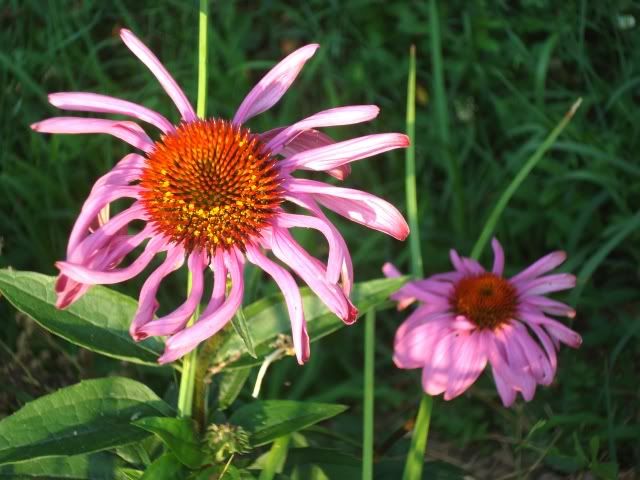
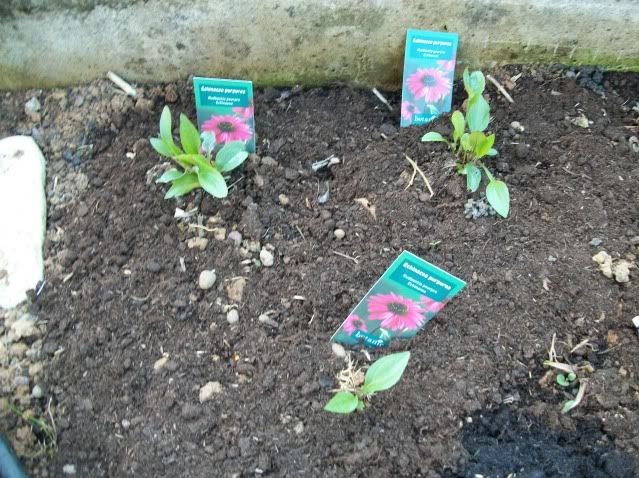
All of the echinacea species will do better from the seeds that are artificially stratified for at least three months. Or the seeds can be stratified naturally, by sowing seeds directly in the garden in the late fall or early spring, this method is reliable only in areas that have consistently cold winters.If the seeds are sown indoors, then the plants are transplanted outside in late spring. The seeds take from 2 to 6 weeks to sprout. Echinacea grows in clumps, the plants needs to be spaced 12 inches apart. The E.purpurea species has to have moderate water, where as the other two species needs light water.
All species of the echinacea requires full sun. E> angustifolia and E. pullida require poorer soil that is not overly moist. E> purpurea needs richer soil and regular watering.
The roots are harvested in the fall or spring after they reach two and one half to three years old. E. purpurea has a tricky -to - harvest taproot. E. angustfolia and E. pallida have fibrous roots that are easier to harvest. The aerial parts, flowers, and seeds can be harvest with snips after the second growing season on. The whole plants are harvested when it is in peak flower. This can be done by using a garden fork or a needle- nose spade to dig the roots and the whole plant in. The whole plant can be used either fresh or dried.
The medicinal benefits of the echinaces are great for colds and flu, immune system support, and respiratory and skin conditions.
There are several different home pharmacy uses, which are, infusion, traditional tincture, bath herb, syrup, lozenge, elixir, butter, foot soak, ointment, salve,, infused oil.

